How to Successfully Get Hired: 10 Practical Tips to Land Your Dream Job
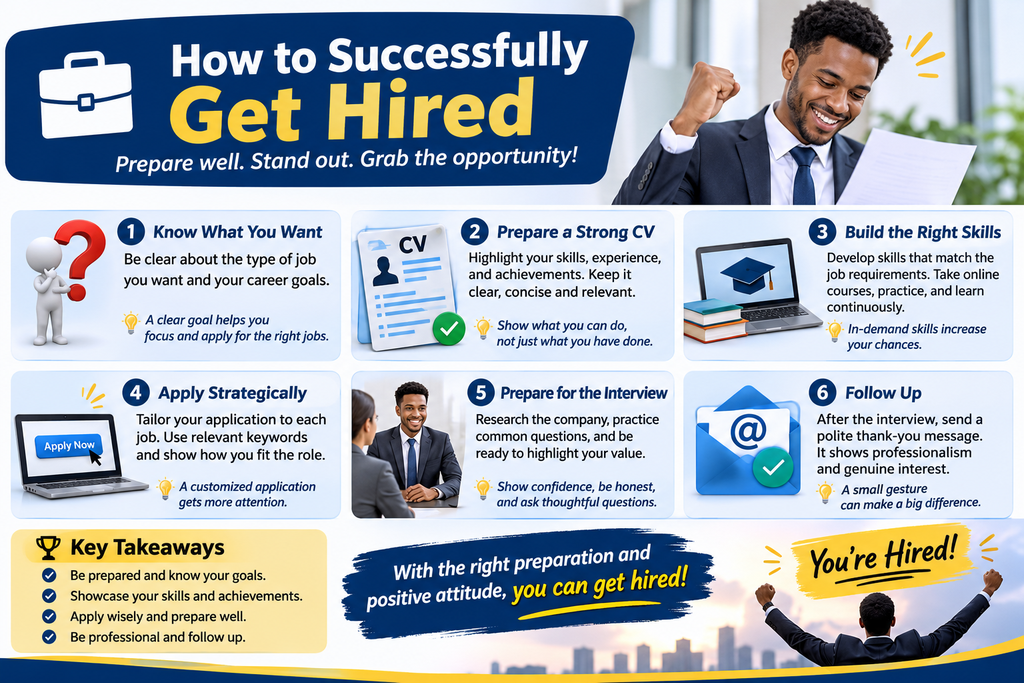
How to Successfully Get Hired: 10 Practical Tips to Land Your Dream Job
Finding a job can be challenging, especially in today’s competitive employment market. Many qualified candidates apply for the same position, but only a few get shortlisted and eventually receive job offers.
So, what makes the difference between someone who keeps applying and someone who successfully gets hired?
Getting hired is not just about having academic qualifications. It is about presenting your skills, experience, attitude, and potential in a way that convinces employers you are the right candidate.
Here are 10 practical tips to increase your chances of getting hired.
1. Know What You Want
Before applying for jobs, identify the type of position you want and the career direction you wish to pursue.
Avoid applying randomly for every available vacancy. Focus on opportunities that match your qualifications, interests, and abilities.
Practical tip: Make a list of your preferred job positions and identify the qualifications and skills required for each.
2. Prepare a Professional CV
Your CV is often the first impression an employer gets of you. A well-prepared CV can help you stand out from other applicants.
Make sure your CV includes:
- Your contact information.
- Educational background.
- Relevant work experience.
- Technical and professional skills.
- Training and certifications.
- Achievements and accomplishments.
Keep your CV clear, professional, and easy to read. Avoid unnecessary information, spelling mistakes, and complicated formatting.
Remember: Your CV should demonstrate what you can contribute, not simply list what you have done.
3. Develop Relevant Skills
Academic qualifications are important, but employers also look for practical skills.
Depending on your career, consider developing:
- Computer and digital skills.
- Communication skills.
- Problem-solving abilities.
- Teamwork and leadership.
- Technical skills related to your profession.
Take advantage of free online learning resources to improve your knowledge and become more competitive.
Practical tip: Identify the skills frequently mentioned in vacancies within your profession and work on developing them.
4. Apply for Jobs Strategically
Do not send the same CV to every employer without reviewing the job requirements.
Read each vacancy carefully and customize your application to highlight the qualifications and experience most relevant to that position.
Pay attention to:
- Required qualifications.
- Work experience.
- Specific technical skills.
- Application deadlines.
- Submission instructions.
A targeted application demonstrates that you understand the position and are genuinely interested in the opportunity.
5. Write a Convincing Cover Letter
A cover letter gives you an opportunity to explain why you are interested in a particular position and why you are suitable for it.
A good cover letter should:
- Introduce who you are.
- Mention the position you are applying for.
- Explain your relevant qualifications.
- Highlight what you can contribute.
- Close professionally.
Avoid copying generic cover letters. Make each application relevant to the employer and vacancy.
6. Prepare Thoroughly for Interviews
Getting invited for an interview is an important achievement. However, proper preparation is essential.
Before attending an interview:
- Research the company and its activities.
- Understand the responsibilities of the position.
- Review your CV and work experience.
- Practice answering common interview questions.
- Prepare examples of your achievements.
- Dress appropriately and arrive on time.
Some common interview questions include:
- Tell us about yourself.
- Why do you want to work for our company?
- What are your strengths?
- What challenges have you overcome?
- Why should we hire you?
Speak clearly, answer honestly, and demonstrate confidence.
7. Demonstrate a Positive Attitude
Employers do not evaluate candidates based only on technical qualifications. They also consider attitude, professionalism, reliability, and willingness to learn.
During an interview, demonstrate that you are:
- Respectful and professional.
- Willing to learn.
- Responsible and dependable.
- Comfortable working with others.
- Able to receive feedback.
Your attitude can make a meaningful difference, particularly when employers are choosing between candidates with similar qualifications.
8. Build Your Professional Network
Not every employment opportunity is discovered through a job advertisement.
Building professional relationships can help you learn about vacancies, industry developments, and career opportunities.
You can expand your network by:
- Connecting with professionals in your field.
- Attending career fairs and professional events.
- Participating in relevant professional communities.
- Maintaining a professional LinkedIn profile.
- Staying connected with former colleagues and classmates.
Networking is not about asking everyone for a job. It is about building meaningful professional relationships.
9. Follow Up After Your Interview
After attending an interview, consider sending a short and professional thank-you message.
Express appreciation for the opportunity and reaffirm your interest in the position.
If the employer provided a specific recruitment timeline, respect it. If that period passes without feedback, a polite follow-up is appropriate.
Professional communication helps demonstrate your interest and maturity.
10. Never Give Up After Rejection
Not every application will result in an interview, and not every interview will result in a job offer.
Rejection does not necessarily mean you lack the necessary qualifications. Sometimes another candidate simply matches the employer’s immediate requirements more closely.
Instead of becoming discouraged:
- Review your application approach.
- Improve your interview skills.
- Identify gaps in your qualifications.
- Seek constructive feedback when possible.
- Continue applying for suitable opportunities.
Every application and interview can provide valuable experience.
Final Thoughts: Your Next Job Opportunity Could Be Closer Than You Think!
Getting hired requires preparation, persistence, professionalism, and continuous improvement.
A strong CV may get you an interview, but your knowledge, communication skills, attitude, and preparation can help you secure the position.
Do not wait until the perfect opportunity appears before preparing yourself. Start improving your skills, updating your CV, and exploring available vacancies today.
Your dream job may be one well-prepared application away!
Looking for your next employment opportunity?
Explore the latest vacancies on our job portal, find positions that match your qualifications, and take the next step in your career.
